Over the past decade, SaaS (Software as a Service) has taken over the market on the strength of one promise: sign up and start using it right away.
But now that AI is starting to redefine development productivity, a strategic question is coming up in many boardrooms.
"Isn't it time to own our own system, instead of renting one?"
This article lays out the pros and cons of both approaches in this new technology landscape.
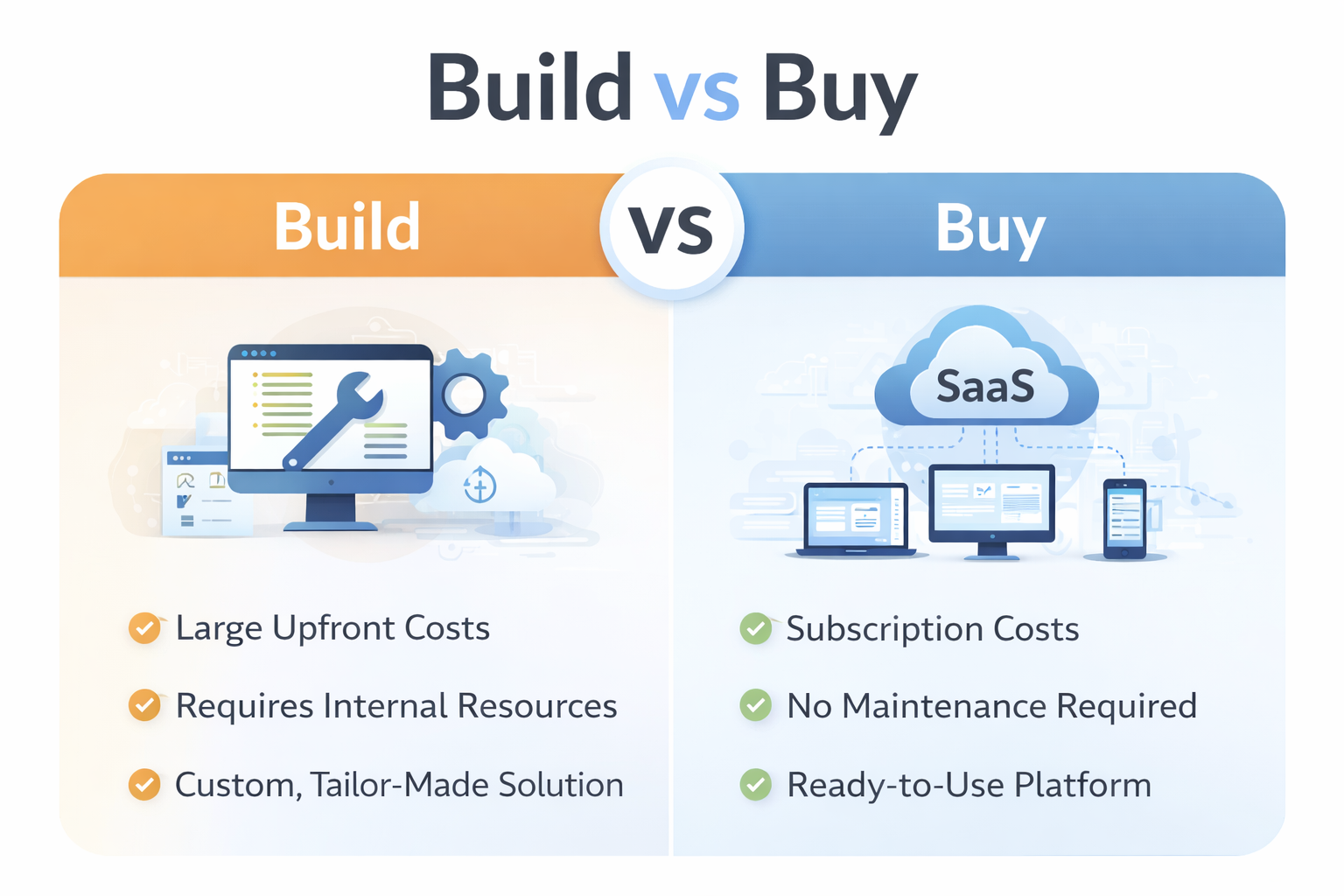
1. The SaaS model (Software as a Service) — "renting" convenience
Pros:
- Speed of adoption: A company can start using the latest technology right away, without waiting on development.
- Lower operational burden: Infrastructure, maintenance, and feature updates are handled by the vendor.
- Easy-to-budget Opex: A monthly subscription makes operating costs simple to forecast.
Cons:
- Vendor lock-in: The more deeply your data and business processes get embedded, the harder it becomes to migrate to another product.
- Limited customizability: Because SaaS is designed for a broad base of users, optimizing it for your own unique processes can be expensive — or simply not possible.
- Data risk: Putting sensitive information on a third party's cloud always carries some concern around privacy and regulatory compliance.
2. Building in-house — "owning" a digital asset
Pros:
- Complete control over your data: Data is a company's most critical asset. Building in-house lets you govern it strictly on your own infrastructure.
- Thorough optimization: You can design exactly "what's needed" for your business processes, cutting the unnecessary features SaaS products tend to carry.
- Long-term value: Once built, it accumulates as an intellectual asset — and you're freed from subscription costs that keep climbing as your user base grows.
Cons:
- Operational responsibility: You need a team, or an operating structure, to own maintenance and security.
- Lead time: A solid roadmap for analysis and design is needed before you can actually go live.
3. AI as an inflection point: when the barriers come down
Until now, the biggest barrier to building in-house has been cost and time. Internal software development required a large budget and highly specialized talent.
But the arrival of a new generation of AI-assisted development tools is changing that significantly.
- Faster development: AI now assists with coding, testing, and even data structure design, potentially shrinking months of development down to weeks.
- Democratized technology: Software design that used to be complex and large-scale is increasingly achievable with a smaller team, at lower cost.
4. Closing thoughts
While SaaS remains the best answer for speed, in-house systems are becoming a strategic choice for durability and data sovereignty. Now that AI keeps driving down the cost of building software, are we standing at the entrance to a wave of migration like this?
Will companies move away from "rented" systems and toward building their own "digital fortress"?
The answer may come down to how each company defines the value of its data, and its own will toward technological independence.